You press the button on your remote, watch your garage door descend smoothly, and just as it touches the ground, it immediately starts to reverse. It’s a frustrating and surprisingly common issue that can leave you wondering if your garage door has a mind of its own.
Modern garage door automation systems are designed for convenience and safety. They are complex pieces of machinery that make our lives easier, but when they start acting up, it can be a real headache. One of the most frequent problems homeowners face is the garage door that won’t stay closed, reversing the moment it hits the floor.
Fortunately, this behaviour is usually a sign that a specific feature is working correctly, even if it’s a bit overzealous.
This blog post explains why your garage door might reverse when it touches the floor, what you can do about it, and when it’s time to call in the professionals.
Why Your Garage Door Reverses After Touching the Floor
When your garage door reverses unexpectedly, it’s almost always a safety mechanism kicking in. Garage doors are heavy, and to prevent them from crushing an object (or a person), they are equipped with several safety features.
Here are the most common reasons why your door won’t stay shut.
1. The Close-Limit Setting is Incorrect
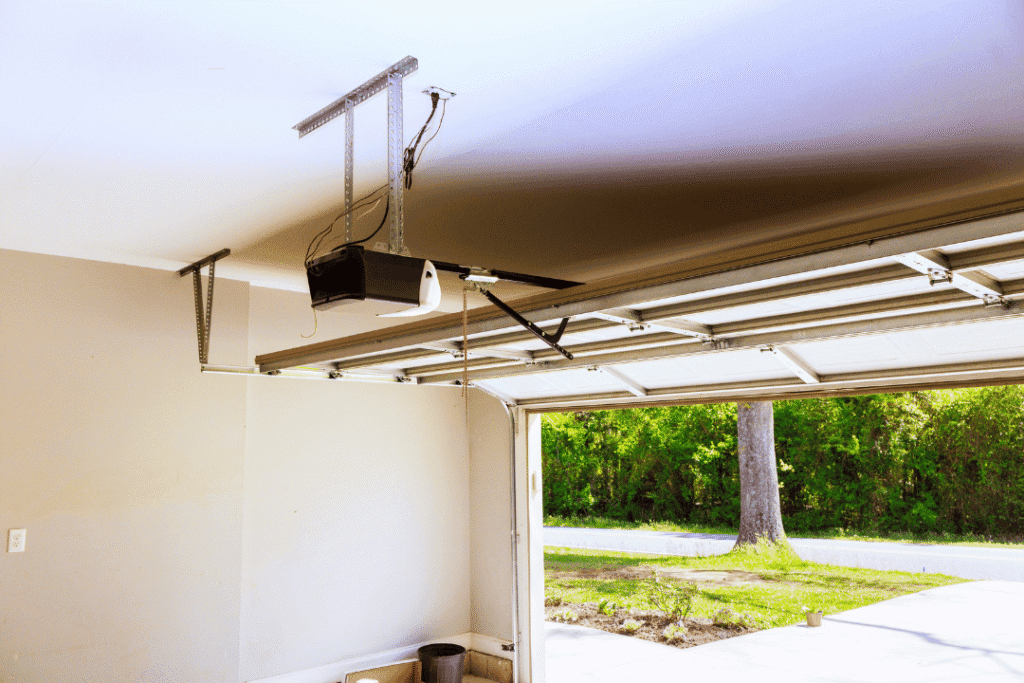
Every garage door opener has a close-limit switch. This switch tells the motor when the door has reached the floor and it’s time to stop running.
If this limit is set too low, the motor thinks the door has hit an obstruction when it makes contact with the ground. As a safety precaution, it automatically reverses to prevent any damage.
Essentially, the door is trying to go further than it physically can, triggering the safety reversal.
2. The Safety Sensors are Misaligned or Obstructed
At the bottom of your garage door tracks, on either side, you’ll find a pair of small photo-eye sensors. These sensors project an invisible beam of light across the garage opening.
If this beam is broken while the door is closing, the motor assumes something is in the way and immediately reverses the door.
Often, the problem is simple:
- Obstruction: A stray leaf, a broom, or even a spiderweb can block the sensor’s path.
- Misalignment: The sensors can get knocked out of alignment, meaning the beam isn’t reaching its target. The small LED lights on the sensors will often indicate a problem (usually by blinking or turning off).
- Dirt or Damage: The lenses on the sensors can become dirty, or the wiring might be damaged, causing them to malfunction.
3. The Close-Force Setting Needs Adjustment
In addition to the limit settings, garage door motors have a force setting. This controls how much pressure the door should apply before it determines there’s an obstacle. If the force is set too light, the door might interpret the normal resistance of hitting the floor as an obstruction and reverse.
This is particularly common during weather changes, as cold can cause parts to contract and create more friction.
4. There’s an Obstruction on the Tracks
It’s always worth checking the physical condition of the tracks.
Sometimes, a small object, dirt, or debris can get lodged in the tracks, preventing the rollers from moving smoothly. When the door hits this blockage, the motor’s safety system will engage and cause the garage door to reverse.
A quick visual inspection of both tracks can help you spot any obvious problems.
What To Do About It
Now that you know the likely causes, you can try some troubleshooting.
For many of these issues, a simple adjustment is all that’s needed.
1. Adjust the Close-Limit Switch:
Your garage door opener’s manual will have specific instructions for adjusting the limit settings. This usually involves turning a couple of screws on the motor unit. One for the open limit and one for the close limit. A small adjustment is often enough to fix the problem.
2. Check and Clean the Safety Sensors:
- Start by wiping the lenses on both sensors with a soft cloth.
- Ensure there are no objects blocking the beam between them.
- Check the indicator lights. If they are blinking, the sensors are likely misaligned. Gently adjust one of the sensors until the light becomes solid, indicating the beam is connected.
3. Adjust the Close-Force Setting:
Like the limit switch, the force setting can be adjusted with a screw on the motor unit. Consult your manual and make small, incremental adjustments until the door closes correctly without reversing. Be careful not to set the force too high, as this could create a safety hazard.
4. Clear the Tracks:
Run your eyes and hands along the tracks to check for any debris, dirt, or damage. Remove anything that could be blocking the door’s path.
If you’ve tried these steps and your garage door still won’t cooperate, it might be time to call in the experts. Garage door automation systems can be complex, and working on them without the right knowledge can be dangerous.
Let Adams Doors Handle It!
While DIY fixes can be effective, sometimes the problem is more complex. A professional technician can quickly diagnose the issue and ensure your door is operating safely and efficiently.
At Adams Doors, we have been specialising in garage doors and garage door automation since 1992. Our experienced teams in Gauteng and Mossel Bay service all kinds of garage doors and motors. We understand the importance of a reliable and safe garage door for your home.
If your garage door reverses unexpectedly or you’re facing any other issues, don’t hesitate to give us a call.
We’ll get your door back on track in no time.